|
The Statesman on 8th October 2021.
During World War I, the Gramophone Company came up with the 'PujorGaan' category to serve Bengali music lover.
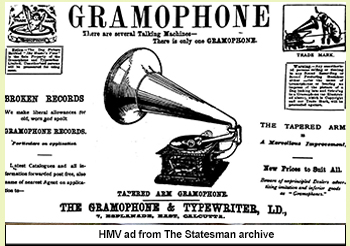 In Bengal, Durga Puja has always been much more than mere religious razzmatazz. Music was always a part of India’s festivals, but once phonograph and gramophone entered the country in the late 20th century, it reached new heights. Overnight, records became a common mode of entertainment, owing to the role of a British company that was established in 1901.
The Gramophone Company, which owned international labels like His Master’s Voice, was the first to explore the market potential of music in the festive season. When importing records from Europe became uncertain during World War I, the company came up with the “Pujor Gaan” or “Sharodia Arghya” category to serve Bengali music lovers. With that, an everlasting cult was created.
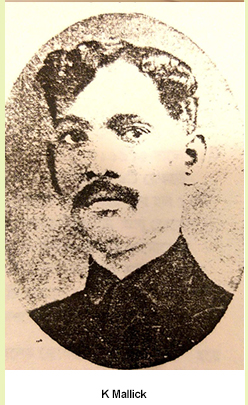
Though many are lost, the earliest available records show that it was in 1914 when the company released 17 titles by various artists. An old catalogue of HMV shows that “Pujo Gaan” never had any exclusive business with religion, although some records contain devotional songs which were always in demand.
Launched right before Durga Puja, the titles were divided into two categories. One was a 10- inch, double-sided violet label, each priced Rs 3.12, while the other was a black label record, each priced Rs 3.
The records of noted singers like Manada Sundari Dasi and K Mallik were released at premium album cover price.
Mallik was an outstanding singer, who hailed from Kusum, a village in Burdwan. A Muslim by birth, his original name was Munsi Muhammad Kasem. Initially, he had recorded a few pieces of “Agamani Sangeet” in Calcutta. The talented singer was soon spotted by an HMV official, and his record of festive songs came out with their label, under the name K Mallik. It is believed that the company’s officials were apprehensive of whether a Muslim singing “Agamani Sangeet” would be accepted by Hindu listeners, and hence, his name was changed.
Mallik created a sensation with his rendition of two devotional songs, one based on raga Mishra Kafi, and the other on Bhairavi.
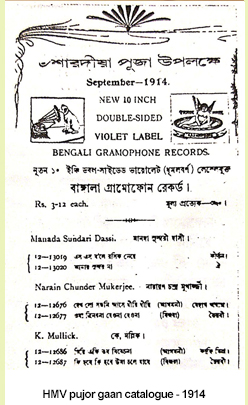 One of his songs, Ki Hobey Uma CholeyJabe, based on the immersion of Goddess Durga, was a smash hit at the time. In the same disc was another number sung by him, Giri a ki Tabo Bibechona. Mallik continued to remain one of the top-selling artists of the company for many years, but never in his original name. One of his songs, Ki Hobey Uma CholeyJabe, based on the immersion of Goddess Durga, was a smash hit at the time. In the same disc was another number sung by him, Giri a ki Tabo Bibechona. Mallik continued to remain one of the top-selling artists of the company for many years, but never in his original name.
Sundari Dasi was the other noted singer of the time to lend her voice to the first-ever “Pujor Gaan”.
One of the two kirtan songs she recorded was Asho Asho Boley Rasik. Top dancer and singer Krishnabhimani Dasi recorded two semi-classical songs based on raga Malkauns and Poorvi. One of them was dedicated to Goddess Kali. Like the legendary GauharJaan, she said at the end of every song, “My name is Keshtobhamini.”
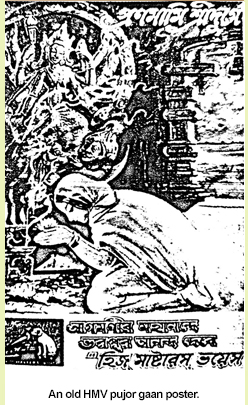 Two records of Bedana Dasi were also released. One of them included songs on Janmashtami, while the other comprised romantic numbers like Ami Eshechi Badhu Hey, based on raga Mishra Kedar. Two records of Bedana Dasi were also released. One of them included songs on Janmashtami, while the other comprised romantic numbers like Ami Eshechi Badhu Hey, based on raga Mishra Kedar.
The songs of Rabindranath Tagore, who was yet to become a household name, featured in the company’s list of Puja releases. During that time, his songs were referred to as “Bramha Sangeet” or “Robibaburgaan”, and not Rabindra Sangeet. Amala Das, popularly known as Miss Das, who was the younger sister of Chittaranjan Das and an amateur, recorded two Tagore songs as “Bramha Sangeet”. Hey Mor Debota, based on raga Yaman Kalyan and Pratidin Ami Hey Jeevan Swami in raga Sindhu Kafi were included in her album. The company officials were far-sighted and quick to tap the commercial potential of Tagore songs, and fully utilised them for many years thereafter.
It was not only vocals, but also comic items and instrumental pieces that hit the market and did well. Abhayapada Chatterjee cut an album with two comic tracks based on conjugal life – StrirProti Swamir Ador and Swamir Proti Strir Sohag. Another comic disc by Chittaranjan Goswami was also released in the same year.
In instrumental music, two records by Tulsidas Chatterjee and Rajen Chatterjee were released. Others included Saralabai, Shashi Bhushan Dey and Narayan Mukherjee, to name a few.
The year was perhaps ripe for introducing the concept of “Pujor Gaan” in Bengal. It was the time when the gramophone was replacing the cylinder phonograph as the latest tool of home entertainment, which became evident with the rising demand for records that was being met by the newly established HMV at Calcutta’s Beliaghata.
The market flourished following nearly 10 years of experimentation, as the magic of gramophone records ushered in a new era of entertainment. Since then, the entry of many new record companies in the “Pujor Gaan” segment has kept adding to the rich cultural heritage of Bengal.
Click here to view the original article
|