| Revisiting Jalliwanalabagh |
|
Photographs :Virendar Singh Rana
As we close in on the 103rd anniversary of JallianwalaBagh Massacre, Somen Sengupta recounts the terrible tale of horror at the hands of ruthless General Reginald Dyer on the fateful day.

The Jallianwala Bagh has long been converted into a memorial and thousands of people on this day come to pay their respects to the martyred men, women, who were killed on that fateful day. But, lest the future generations forget, here is how the history unfolded:
11th April 1919 : GT Road between Jallandhar to Amritsar :
In the womb of darkness a motor car was speeding madly to cover 90 km of distance crossing jungle and small villages on it’s both side. It seems the car was running for it’s life in that hot and sultry night of April.The man traveling on the back seat of the car was Rex as his friends and peers used to call him.The fifty plus man is a Brigadier General who was ordered on that night to rush Amritsar by his boss based at Lahore the capital of undivided Punjab. The man who was looking strong yet nervous had very limited details about the crisis for which he was rushing but he was awaken with this much of idea that he is going to save crown of Queen in India.
When Reginald Dyer commonly called as Rex reached Amritsar station where practically all British officers had their shelter in that night it was 9 pm. Exhausted yet full of zing Dyer rushed to a railway carriage with Miles Irving the Deputy Commissioner to have a brief of the violence that was rocking Amritsar for last 3 days. He was sure that British conquest of India is before a serious challenge.This level of vandalism, killing, loot, arson and attack on European ladies made him soon convinced that he is standing between British rule in India and a gory end of all
March & April 1919 -Punjab in tumult : Amritsar under mob rule :
It was the summer of discontent for both Indian and Brits in April 1919.
Leaders of National Congress were almost sure that at the end of 1st world war India will be given enough chance to “ develop self governing institutions with a view to the progressive realization of responsible Govt in India as an integral part of British India” as described by Edwin Montagu the secretary of state of India on 20th August 1917.More to that in 1917 when USA joined the war the US President Woodrow Wilson’s words like a war against “ autocratic power “ and for the sake of “ liberation of it’s people “ created a mayhem of hope in Indians.
India supported Great Britain in 1st world war .
Apart from recruiting lakhs of soldiersIndian leaders like Gandhi openly announced his support for Raj.Such was his enthusiasm that he even tried to send people from Ranchi to Mesopotamia for installing railway track for the sake of British army’s logistics.
All expectation ended in frustration when instead of gaining any governing authority Indians got Rowlatt Act that passed on 21st March 1919.
The act gave Government an extra ordinary power to quell sedition.A draconian legislation as correctly said this act was a clear betrayal to Indians and it gave South Africa returned Mahatma Gandhi a chance to launch him as a national leader.
On 9th April Gandhi was prevented to enter Punjab and was arrested from Palwal near Delhi while two local leaders Dr Satyapal and Dr Saifuddin Kichlu were arrested. Next day morning they were deported to Dharamshala and that created an uncontrollable mob fury that turned destructive.
Dyer got a vivid report from Miles Irving who on 8th April itself requested military support from Lahore.
10th April 1919 – A mob on rampage
The violence erupted in Amritsar after killing of nearly 30 Indians on 10th April by police firing when they tried to cross Hall Gate Bridge to enter civil lines. It finally turned violent and destructive.
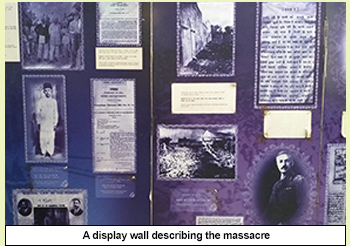
Mob attacked every single signature of colonial ruler.
From railway station to missionary school everything went in rampage. Banks with European employees were set on fire after looting the cash. Telegraph posts were uprooted and Queen Victoria’s statue was vandalized. Five Europeans were killed including 3 banks managers and one Railway employee. Miss Marcella Sherwood an European missionary working in Punjab for 15 years was attacked and left bleeding on the road.
12th April 1919 : A bleeding city & an antagonistic general
Reginald Dyer made several rounds of the city with Irving seeing charred banks, school, church and disturbing posters like “ Kill & to be killed” or “ Conquer the English Monkeys with bravery”. Meanwhile news of similar vandalism started reaching from other parts of Punjab.At 10 am news came that a mission hospital was attacked at Atari.
Dyer who belonged to a generation that had grown up by hearing gory outcome of violence on Europeans during 1857 was convinced that the greatest calamity since the mutiny is here again.
13th April 1919 :1650 bullets and an unarmed festive mob :
In early morning Dyer scaled the city and his men went on reading proclamation with beating of drum. It was read out in Punjabi and Urdu at 19 crowded corners and squares of the city including Tower Clock where anti colonial poster were still on display.
The proclamation was candid and giving a clear message what rulers expect from Indians to bring the city into order.
Noone is allowed to leave home without a pass. Noone is allowed on the street after 8 pm
No procession is allowed.Any gathering of 4 men is an unlawful assembly and many more to implement “Rowlatt “ whenever needed.
While traveling in the town Dyer faced jeered comment, laughter and various hostile remarks from the public.By 1:30 pm it was 40 degree Celsius and Dyer came back to his office at Ramgargh.
History is not very clear at what time someone reported Dyer that a huge mob has gathered at a place near Golden temple.
Knowing upon this he with 25 Gurkhas and 25 Baluchi soldiers all armed with .303 Lee Enfield with two armoured cars rushed to a dusty wasteland of 7 acres a closed enclave which was surrounded with walls from all three side and open on one with narrow passage lined up with unimpressive brick walls. The place though called Jalliwanalabagh had no merit of a garden atleast.
There was a gathering of 20000 people mostly coming from rural areas to celebrate Baishakhi the harvesting festival of Punjab.It was a mild political gathering on a Sunday afternoon with women and children.However some people were delivering political speeches.8 speakers already done and when Dyre arrived one Durgadas Vaidya editor of “ Waqt” newspaper on the podium.
Punjab born Dyerwas not unknown to the festival Baishakhi but he preferred to forget it with conclusion that this gathering is a direct challenge to his office. For him it was his duty to stop it there itself.
He did exactly that no civilized man would ever do.
His people were ordered to kneel down and take their position to point up the guns towards the direction where massing was formed.Then suddenly without giving any warning he did ahorrific act of madness.
He asked his men to pull the trigger on the mob.
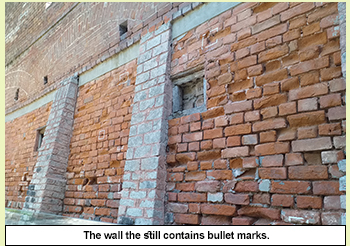
There was no announcement of dispersal saying that this gathering is illegal. Soldiers were not told to fire at feet of the mob but to fire at chest, wombs and face. Just at the distance of hardly 150 yards a rain of bullets fall upon people who were not even aware that someone is targeting them.
With the initial shock was over people realized that they are in mouth of death and then in an utter state of panic and confusion people tried to cover themselves behind any shelter. It caused stampede by clambering on top of one another. Bodies started collapsing like cards with blood on ground. A horrific cacophony of screams&pangs filed the air. Many people tried to cross over a locked gate and some people jumped into a well. Dyer ensured that every single bullet must find a target. He was done with 379 dead bodies and more than thousand injured. The pile of dead crossed 10 to 12 fts when dust finally settled with streams of blood. Many who managed to escape in injury collapsed on the road.
Firing stopped nearly after 10 minutes only when Dyre thought that hehas taught Punjab a great lesson.
Leaving the hell behind Dyer with no emotion in his face came back to office and announced curfew in city. Electricity and water line were cut off.Noone was allowed to salvage deadbodies of their relatives.It was left to dogs and vultures for the time.
News persons were prohibited to visit the site of the massacre. Newspapers were not allowed to print anything. Radiobroadcasting was yet to come in India.
The suppression was so tightly imposed that in next few days no news of this massacre was reported in Calcutta’s The Statesman , Bombay’s The Times of India and Allahabad’s The Pioneer all pro British newpapers. Indian newspaper like The Tribune of Punjab and The Hindu of Madras were also not allowed to print anything.
After few weeks B G Horniman of Bombay Chronicle exposed it in big way and soon Calcutta’s Amrita Bazar Patrika gave more details of the massacre. The report published in Amrita Bazar Patrika was read by Lenin in Russia and his expressed his sympathy to Indian people through this paper.
The first photograph of the place was taken after several days of massacre and by that time facts started fabricated,brittle., obscured and exaggerated myths. One such legend was that all Indian soldiers refused to fire at mob and Dyre did his job only with Anglo Indians and Europeans.
Lahore : 14th April 1919 – An early morning message to Governor General :
The sound sleep of Micheal O Dwyer Governor General of Punjab was interrupted when British officers from Amritsar knocked his door at 3 am in morning.They were to update him about the firing of last afternoon and death toll was reported 200.It is not in record how did he react with the news but he sent a note to Dyer in Amritsar saying “ your action correct & Lieutenant Governor approves”.
This is enough to understand that firing at unarmed mob was more of a collective sin and Reginald Dyer was empowered enough to cross every line of brutality to hold his authority.
Dwyer &Dyer : 2 men and one common sin :
They are two different persons coming from two different backgrounds but history of mankind will mingle them in one sin committed jointly. They are often mistaken and wrongly referred for the similarity of their name.
Michael O Dwyer the Lieutenant Governor of Punjab was 14th child of a middle class Scottish farmer who cleared his ICS and soon joined his work in India as Punjab Settlement officer.He was always apathetic to Indians specially of hindus whom he thought extremists always incline to uprise a mutiny in police and army. He used to refer them as “ Tilak School”.
When disturbance in Punjab started in March he wanted to implement martial law but did not get sanction from his boss.

Dwyer was in Lahore on the day of massacre and had no idea of the event even after 10 hours of it’s occurrence. He only had given a free hand to his team to tame down ongoing lawlessness in Amritsar. He had his end in London on 13th March 1940 when Udham Singh pumped bullets in his chest and took revenge of Jalliwanalabagh.
On the other hand Reginald Edward Harry Dyer had close India connection.
He was born in Kausali hill of Punjab in 1864 to a father who owned India’s first modern beer brewing company owning a brand named “ Lion Beer “. His grandparents got married in Calcutta.
After spending first 11 years of his life in India he went to Great Britain where in school and college he was bullied by his peers for his stammering and his sun burnt brown skin. The tall well built and hardworking chain smoker man was lacking “cerebral quality” and was almost inactive as a soldier during the war years though he spent some time in Eastern Persia& Burma in his official posting. He is the man who without any warning fired on a mob that left 379 killed in 10 minutes. Unofficially the toll was 1300 plus.
He had a natural death in 1927.
The aftermath : Support and brickbat :
There was not much protest from elites of Punjab.
The wealthiest king of Punjab HH Maharaja Bhupinder Singh of Patiala famous for his passion of wine, women, cricket and Rolls Royce cars did not utter a single word in protest of this killing.He rather rendered his full support to Dwyer’s servile loyality. On 22nd October 1919 he hosted a gala banquet in honor of Lord Chelmsford where he took pride in Punjab’s supply of soldiers to British army during war and the excellence of English cricket. Needless to say it was supplemented by expensive Scotch whisky, gift, English band and tiger shoots in jungle.
Impossible it may sound but the fact remain that Reginald Dyer attracted huge support both from India and Britain even though Govt of India tried it’s best to disassociate itself from the massacre.Dyer who faced the Hunter commission in Lahore lost his job withsoft degree of castigation though his act was described as “ an iconic example of brutality”.
In India European community and many other organizations collected fund for Dyer. British historians like Brian Bond, Ian Colvin and Arthur Swinson supported Dyer’s act.
Winston Churchill described this event as “ monstrous” and “ sinister” where as surprisingly Bombay born and Punjab grown Nobel laureate Rudyard Kipling supported Dyer’s act as “ man who saved India “.
3rd June 1919 : A letter in Calcutta’s The Statesman
When actual situation was clear to access the degree of atrocity a 58 years old man who was an international celebrity and face of Asian wisdom to West could not remain silent. Though he has hated jingoism and zealotry in the name of nationalism took his pen out to write a letter to Viceroy loaded with logic and emotion where his agony and protest as a part of a suppressed race found a space without any hesitation in saying that “ the time has comewhen badges of honour make our shame glaring and by taking side with mycountrymen who for their so called insignificance are liable to suffer a degradationnot fitfor human beings”.The ground breaking letter ended with an explosive sentence saying “ with due deference and regret to relieve me of my title Knighthood “.
The Statesman of Calcutta one of the mouth piece of British rule in India in those days that played a role in collecting fund for Dyer published this letter on 3rd June 1919 with a note that : Sir Rabindranath Tagore informs us that he has sent the following letter to the Viceroy”.
Lahore : 19th November 1919 – “ People would all come back laugh at me “
Seven months after the massacre Dyer appeared before the investigation committee headed by Lord Hunter.
The committee formed with European and Indians never came into agreement but it clearly stated the act as an “ unfortunate” and “ injudicious” though it approved another 37 cases of firing ordered by Dyer.
Dyer himself shown no remorse or repent for his act and without any cavil made it clear that anything less would have been a matter to ridicule him. He clearly said that any other action would make him a fool. He was unshakable in his believe that he saved British rule in India.
Dyer lost his job but no benefit of retirement.
He resigned from his “ dirty job “ and left to Bombay even without any hotel reservation .He spent his last night in India the country of his birth in a nauseating dirty dormitory in Bombay before boarding a ship to London.In England he got support of MPs from House of Lords.
Later 26317 pounds was amassed for him along with a jeweled sword as a mark of bravery that he shown to save crown of Queen.
Brtish brutality in Punjab during that era was more of fear of another mutiny type situation in which shadow of Russian support was seen. Historians will later prove this fear irrational.This cold blooded imperial ruthlessness did not end British Raj in India but it paved a new path ofliberty from where new age leaders like Gandhi, Neheru, Bose, Patel, etc overtook and finally break shackles of slavery for the nation.
This article was published on 10th April 2022 in The Pioneer.
Click here to view the original article
|